Less vibration. More comfort.A small detail.
A small detail.
A calmer home.
Anti-vibration mats for a quieter everyday life. Find the right base for your washing machine, refrigerator and home.
Choose well. Live quietly.
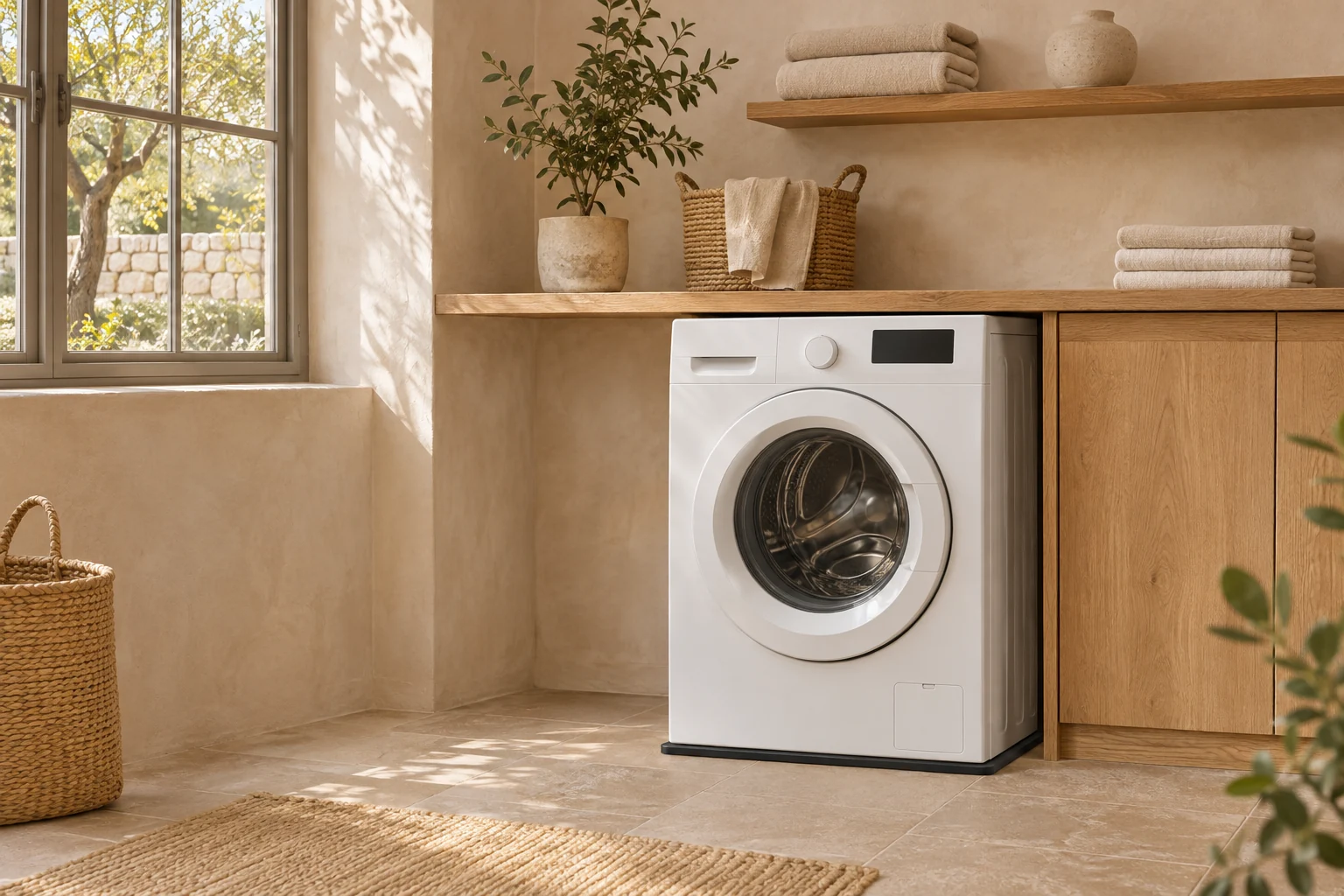
Illustrative interior · AI-generatedReduce noiseProtect floorsImprove stability
The right mat
for everyday living.
From a quiet refrigerator to a stable washing machine: find the right base for your needs.
Advertisement · amazon.com
06 · amazon.comSelected products
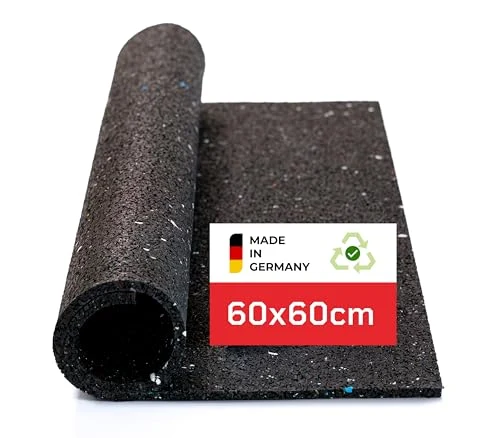
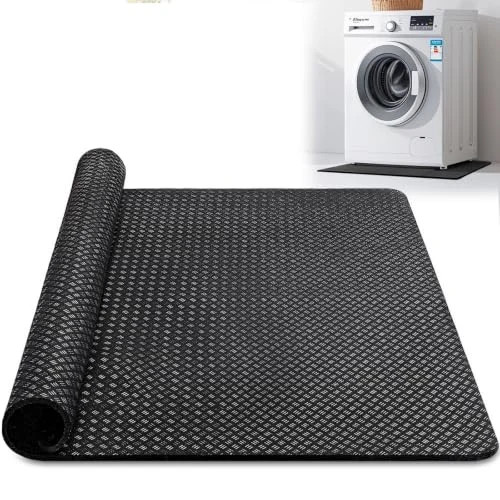
Anti-vibration mat
Search on Amazon.com ↗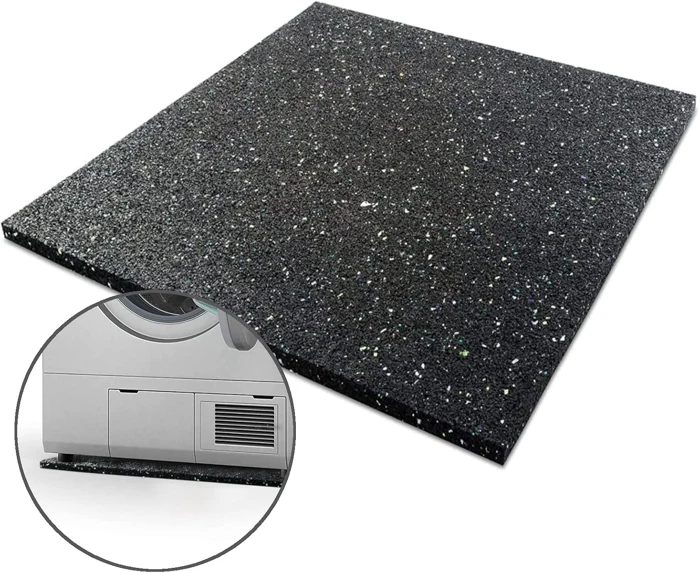
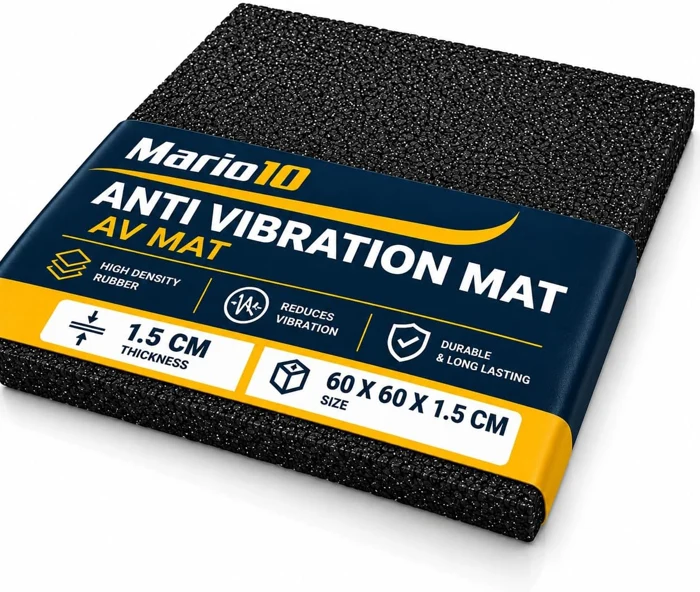
Check the current price and availability directly on Amazon.
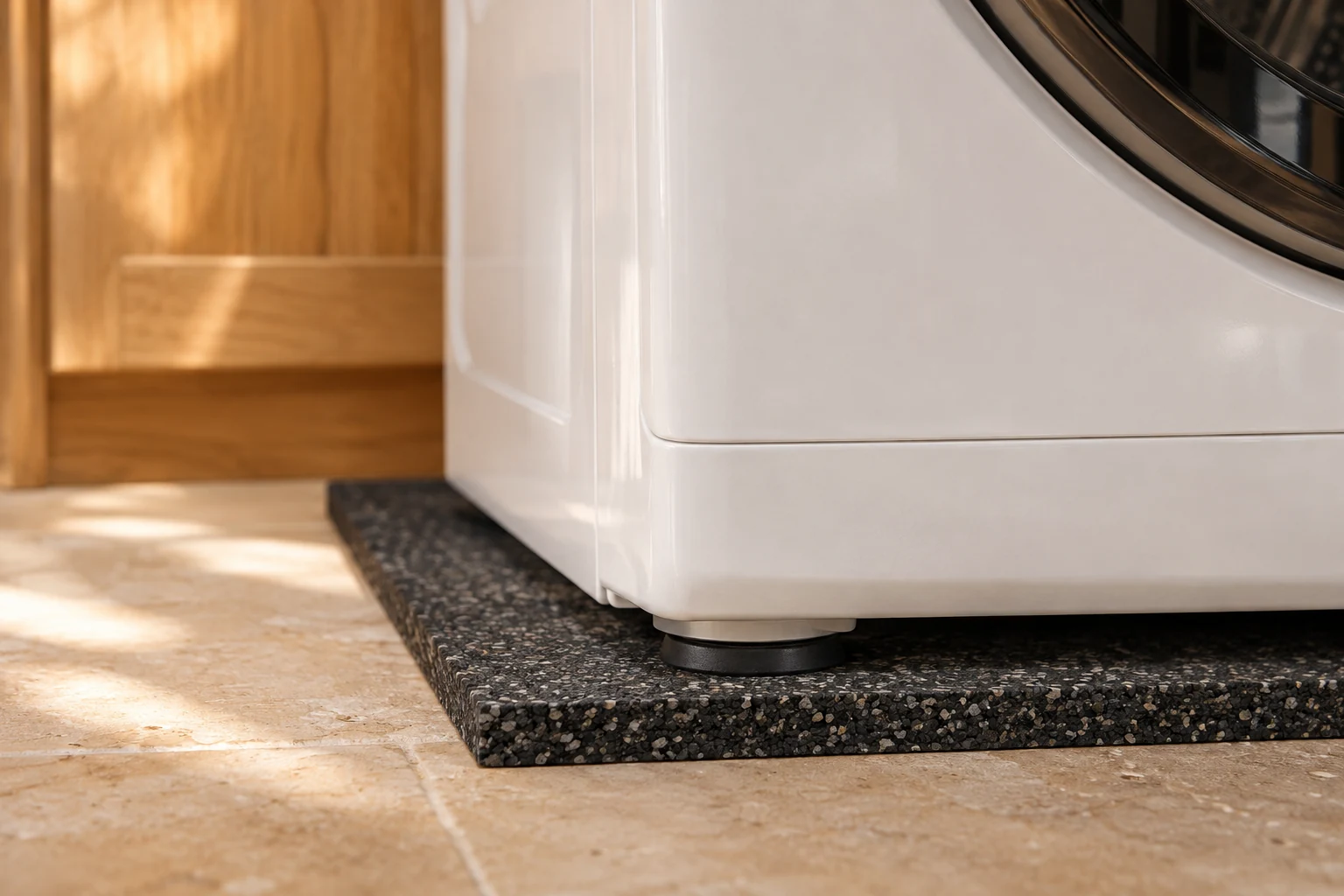
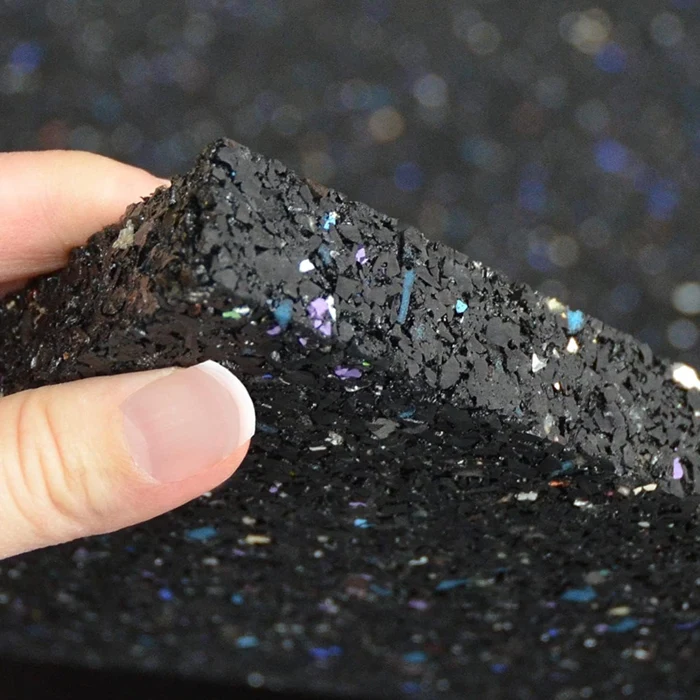
A closer look at the material
Choose well. Live quietly.
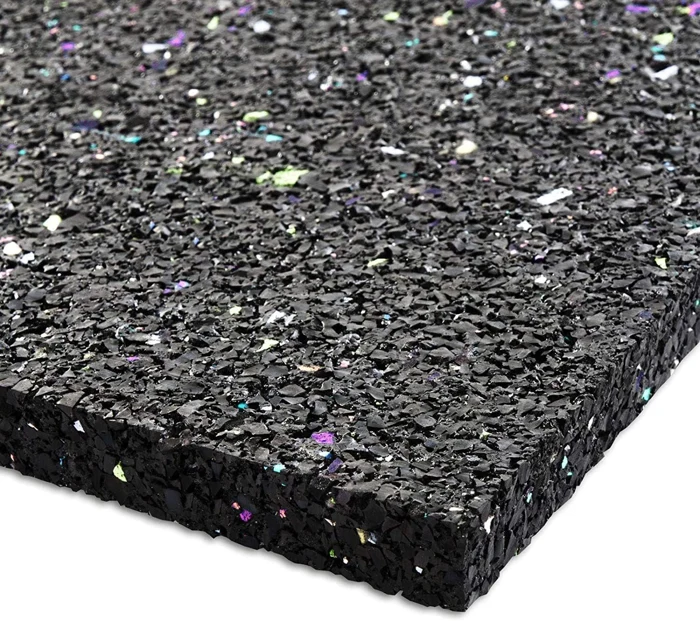
Rubber granules combine a grippy surface with an elastic structure. A suitable choice also depends on the appliance and floor.
Read the guide ↗Illustrative interior · AI-generated
Introduction: Why anti-vibration mats are so beneficial
An anti-vibration mat is a simple but very effective solution when devices cause vibrations in everyday life: loud spinning, “walking” across tiles or laminate, rattling noises in the next room or a noticeable rumble that spreads across the floor and walls. Especially with washing machines and dryers, forces arise at high speeds that are not only disruptive but can also put a long-term strain on the material. A suitable mat reduces the transmission of these vibrations, decouples the device from the surface and thus improves comfort and peace in the household. This is particularly helpful in noisy apartments, old buildings or apartment buildings where impact noise and structure-borne noise quickly become a conflict issue. At the same time, a mat protects sensitive floors from pressure points, scratches and micro-cracks that can arise from constant movement. The principle also works similarly for fitness equipment, loudspeakers or workbench machines: the surface is protected, noises are dampened and the stand becomes more stable. It is important, however, that not every mat is suitable for every use. Thickness, density, surface and dimensions determine whether the mat really provides cushioning, is non-slip and supports the device securely. Those who make targeted selections and install them properly can often achieve a noticeable improvement with little effort. In the following sections you will find clear guidance: from the causes of typical vibrations to selection criteria through to specific applications and a practical checklist for assembly.
Understanding vibrations: causes, consequences and typical problem areas
Before you buy an anti-vibration mat, it's worth taking a quick look at the causes: Many vibrations don't just happen, but rather through a combination of imbalance, surface and device settings. An uneven load is a classic problem with washing machines, especially when spinning. There are also minimally crooked adjustable feet, which directly transmit every movement on hard floors such as tiles or concrete. As a result, structure-borne noise can travel across the floor into walls - and suddenly you can hear the humming in the next room or with the neighbors. At the same time, the “dancing” means that connections, seals or housing parts are subjected to greater stress, which can affect their service life. This is exactly where good decoupling comes in: it absorbs some of the energy, distributes pressure peaks and reduces the transmission of vibrations. Problems occur particularly often in rooms with smooth, hard floors, but also on floating laminate, which can itself act like a resonance board. In such cases, instead of “tightening it even harder” or “aligning it even more precisely”, a mat can be a quicker and often more effective lever. If you are looking specifically for the washing machine, the page Anti-vibration mat washing machine is a good place to start, while if you experience more "rumble" and resonance, you should also consider a softer, more dampening solution, such as those found under damping mat is described. And if your main problem is slipping, a particularly grippy variant can be useful - the topic is often associated with types of mats such as vibration mat. In the end, the decisive factor is not just “whether a mat”, but “which mat fits the cause”: imbalance needs damping, smooth floors need grip, sensitive surfaces need protection – and sometimes it’s the combination of everything.
Choose the right mat: thickness, material, size and load capacity
The selection is easier if you systematically check four criteria: material, thickness, dimensions and resilience. Many mats are made of rubber granules or a compact rubber mixture because this material absorbs vibrations well, is robust at the same time and does not weaken in damp rooms. The thickness acts like a "spring travel": thinner mats can protect the floor and reduce some noise, thicker mats decouple more - especially with heavy equipment and high speeds. Important: A mat must not be too soft if the device is very heavy, otherwise it can deform unfavorably and impair stability. That's why the load capacity or compressive strength is a real purchasing criterion. Size also counts: It is ideal if the footprint of the device is completely flat or the mat is dimensioned so that the feet stand securely and do not “tip over” on the edge. If you want to remain flexible, choose options that can be cut to size. For pure floor protection and a non-slip stand, a rubber mat washing machine can be a suitable option, while if the focus is on reducing noise, a more insulating version such as insulating mat washing machine is often chosen. If, on the other hand, you are looking for a particularly robust, universal base that can withstand mechanical stress well (e.g. in a workshop, basement or fitness room), a building protection mat can be interesting. A practical tip: Measure not only the width and depth of the device, but also the available space (door opening, base, ledges) so that the mat doesn't get in the way later. And think about the surface: on very smooth tiles, a non-slip surface has more effect than an extremely soft mat, while on “resonating” constructions (wooden beam ceilings, floating laminate) damping often has the greater effect. Anyone who combines these factors will make a decision that will not disappoint after two washes, but will bring peace and stability in the long term.
Use cases in the household: washing machine, dryer, refrigerator & more
The most well-known is the anti-vibration mat under the washing machine - but the possible uses go much further. In a washer-dryer tower, a mat can not only lie under the washing machine, but also help between the washing machine and dryer so that the upper structure remains stable and “works less” when the bottom is spun. In households with late washing times (shift work, small children, limited time slots), every dB counts less because otherwise the sound is quickly perceived as annoying. A mat can also be useful for refrigerators if the device is on hard floors and compressor vibrations can be heard as a hum. You can find a separate classification for this at Anti-vibration mat refrigerator. The fitness area is also exciting: exercise bikes, treadmills or weight benches benefit from a robust base that not only dampens vibrations, but also protects the floor from pressure points - especially with point loads. For such “all-round” applications, many people turn to durable mats that originally come from building protection because they can withstand a lot of mechanical resistance. If you choose specifically according to thickness, you can use different thicknesses depending on the application, e.g. B. Building protection mat 5mm for lighter applications or protective layers and stronger variants if more decoupling and protection are desired. Loudspeakers are also an underestimated application: low frequencies can cause floors to vibrate; A decoupling base reduces vibration and can also relieve pressure on the neighborhood. It is crucial to clearly define the intended use: Is it primarily about slip resistance? About structure-borne noise? About soil protection? Or all together? The clearer you answer this, the more targeted you will be in choosing a mat - and the sooner you will notice the difference in everyday life: less vibration, less hiking, less noise stress.
Assembly & practice: cutting, substrate, care and common errors
The best mat is of little use if it's wrong - that's why assembly counts. Start by aligning the device: adjust the feet correctly, use a spirit level, and check whether the device rests cleanly on all feet. Only then does the mat come into play. The surface should be clean, dry and free of grains of sand, otherwise pressure points can arise. Lay the mat flat, without wrinkles or protrusions, and make sure that the device is in the middle. When cutting, it's better to work in small steps: too big usually doesn't matter, too small can become unstable. A common mistake is to place a mat that is too soft under a very heavy device and then be surprised that it is “spongy” - a more robust, thicker solution can help here, such as Building protection mat 20mm for more material reserve and protection. Another mistake: You expect miracles even though the machine is loaded very unevenly or has defective shock absorbers. A mat reduces transmission but does not replace maintenance. In damp rooms such as the bathroom or laundry room, care is easy: Most mats can be wiped clean, but should not be left standing in wet conditions for long periods of time. Occasionally lifting the mat and cleaning the floor underneath will prevent dirt from collecting. After the first few washes, also check whether the mat slips or deforms - then you can readjust it before it “slips in”. Practical tip: If your main problem is hiking, test the grip first (shake the device slightly) before evaluating the cushioning. And if you want to unpair multiple devices (e.g. washer and dryer), prioritize the loudest or strongest vibration signal first. With clean alignment, the right choice of materials and correct placement, you can usually achieve exactly the goal that many people want: a quieter home, a more stable position for the devices and less stress caused by noise.
FAQ
- 1) Does an anti-vibration mat really reduce the volume?
- Yes, often noticeable - especially because structure-borne noise is less transmitted into the floor and walls. However, the effect depends heavily on the surface, device (unbalance/technology) and the appropriate choice of mat.
- 2) What thickness makes sense for a washing machine?
- This depends on weight, spin speed and floor. On hard, smooth floors, more stable mats with good grip often help; If there are resonance problems, a thicker, more dampening mat can be useful.
- 3) Do I still have to level the washing machine if I use a mat?
- Absolutely. A mat is not a “replacement solution for a spirit level”. Neatly adjusted adjustable feet and a straight alignment are the basis for the mat to achieve its optimal effect.
- 4) Can I cut the mat?
- Many mats can be cut to size. Make sure to measure carefully and later leave the device to rest completely and stably so that there is no tipping edge.
- 5) For which devices is an anti-vibration mat still worthwhile?
- In addition to washing machines and dryers, refrigerators (compressor humming), fitness equipment, loudspeakers as well as workshop and household machines are typical candidates - wherever vibrations are disruptive or floors need to be protected.
This article has been machine translated.